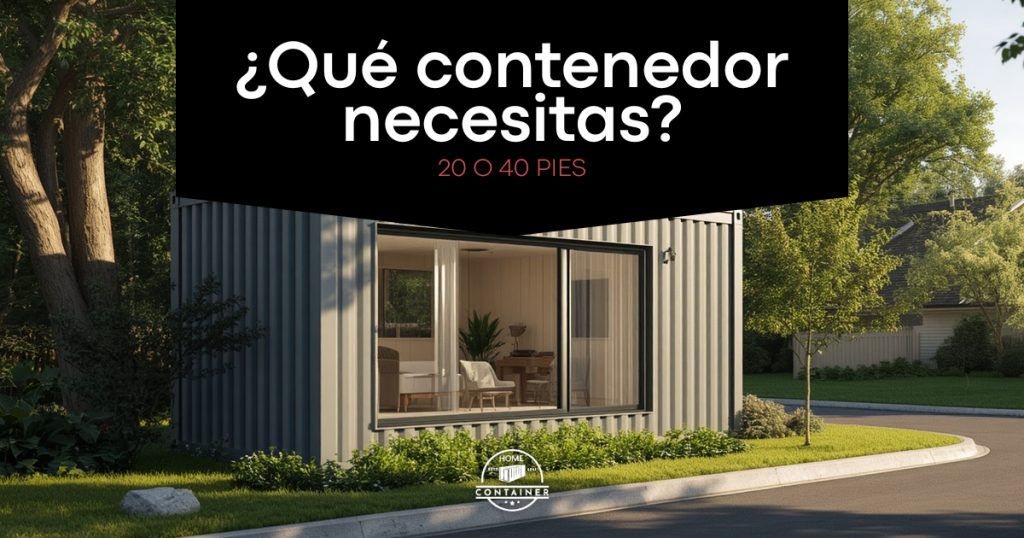
Choosing between a 20 ft or 40 ft shipping container may seem straightforward, but making the right decision requires carefully considering its intended use, the available space and the amount of material you need to store. The largest container is not always the most suitable option, just as a compact model may become too small as your needs increase over time.
Your choice also affects practical aspects such as transport, unloading, the manoeuvring required to position the container and ease of access within a property, construction site or business premises. That is why, before buying, it is worth understanding the differences between a standard 20 ft container, a High Cube model and a 40 ft container.
In this guide, we look at the characteristics of each format and explain which option may be most suitable for properties, construction sites, businesses, private storage and projects across the Costa Blanca and Marina Alta.
Differences between a 20 ft and a 40 ft shipping container
The most obvious difference between the two models is their length. A 20 ft shipping container is approximately six metres long, while a 40 ft container measures around twelve metres. This difference practically doubles the available capacity, but it also changes the requirements for transporting, unloading and installing the container.
A 20 ft container is generally easier to position in limited spaces. It can access smaller plots, properties with narrow entrances or construction sites where manoeuvring is restricted by buildings, walls or vegetation. Its compact size does not mean limited capacity for common uses: it can accommodate tools, machinery, furniture, building materials and a considerable amount of goods.
The 40 ft model, on the other hand, is designed for situations where interior volume is a priority. It is a suitable solution for businesses, large construction projects, auxiliary storage facilities or conversion projects requiring a much larger surface area. Before choosing one, it is essential to make sure there is enough space both for its final position and for the transport vehicle to manoeuvre.
| Model | Approximate length | Common use |
|---|---|---|
| Standard 20 ft | 6 metres | Properties, small construction projects, tools and auxiliary storage |
| 20 ft High Cube | 6 metres, with additional height | Bulky goods and projects requiring greater interior height |
| 40 ft | 12 metres | Businesses, large storage facilities, logistics and modular projects |
These measurements are approximate and may vary slightly depending on the model. You can find the specifications of the different options in our section on types of shipping containers.
When to choose a 20 ft shipping container
The 20 ft model is one of the most popular options thanks to its balance between capacity, durability and ease of installation. Although it takes up less space than a 40 ft container, it provides sufficient volume for many private and professional requirements.
It is particularly useful when you need a container for a property or plot of land. It allows you to keep tools, agricultural machinery, outdoor furniture, irrigation systems and other materials protected from rain, sunlight and unauthorised access. Its robust structure makes it a more secure alternative to many temporary sheds or lightweight structures.
It is also commonly used as a container for construction sites. During renovation or construction work, it can serve as temporary storage for tools, bags of materials, machinery, finishes and other items that need to remain organised and protected. Its size makes it easy to install close to the work area without taking up an excessive amount of space.
Mobility is another important factor. If the container needs to be moved in the future, the 20 ft model generally offers greater flexibility. It can therefore be the right choice for anyone looking for a solution that combines capacity, ease of installation and the possibility of reuse across different projects.
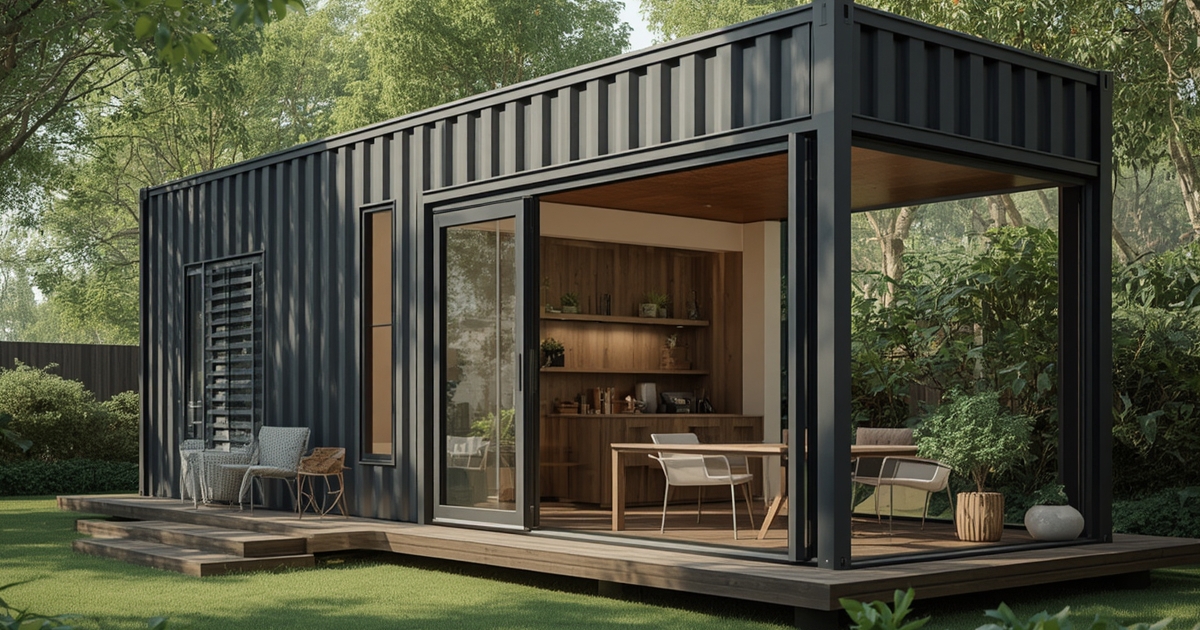
What is a 20 ft High Cube container?
The term High Cube is used to describe containers that are taller than standard models. They have a similar length but provide additional interior height, which can make a significant difference in certain projects.
At first glance, the difference may seem small. However, the additional space makes it easier to store bulky goods, tall structures or machinery that does not fit comfortably inside a conventional model. It also creates a greater sense of space when the container is converted into an office, workshop, commercial space or habitable module.
A 20 ft High Cube shipping container can be an interesting alternative when space on the plot is limited but you want to make better use of vertical volume. Rather than increasing the length of the installation, additional capacity is gained through greater height.
Before choosing this option, it is advisable to check model availability, the actual requirements of the project and transport conditions. Not every use requires a High Cube container, but it can make an important difference when interior height affects the activities that will take place inside.
When is it worth buying a 40 ft container?
The 40 ft shipping container is designed for projects requiring considerable capacity. Its main advantage is that it provides a large, continuous interior space without the need to install two separate units.
This model is particularly useful for businesses that need to expand their storage capacity, store seasonal stock or create an auxiliary area for materials and equipment. It can also be used on large construction sites involving numerous professionals and a high volume of tools or supplies.
For conversion projects, its dimensions provide greater flexibility when creating different areas. It can be transformed into a modular office, commercial space, workshop or the basis for a customised construction project. The available surface area makes it easier to incorporate entrances, windows, installations and internal partitions.
However, choosing a 40 ft container requires more precise planning. Vehicle access, manoeuvring space, ground conditions and the surface on which the container will rest must all be assessed. On a small property or one with difficult access, installation may be less practical than with a 20 ft container.
The decision should therefore not be based solely on obtaining more capacity. A 40 ft container is worthwhile when there is a genuine need for additional volume and the location allows it to be unloaded safely.
Which container should you choose for a property or plot of land?
For a property or plot of land, a 20 ft container will usually cover most common requirements. It provides enough space to store tools, brush cutters, agricultural equipment, furniture, bicycles or small machinery without taking up an excessive amount of land.
However, the appropriate size will depend on how the property is used. A plot intended for private use will not have the same requirements as an agricultural property where pallets, irrigation systems, machinery or large quantities of materials need to be stored.
Future growth should also be considered. If the container will be full from the outset, choosing a larger option may be worthwhile to avoid having to add a second unit shortly afterwards. On the other hand, buying a 40 ft model to store only a few tools may take up unnecessary space.
Ground conditions are another important factor. The container must be installed on a stable, level surface capable of supporting its weight. There must also be sufficient space to open the doors fully and handle stored materials comfortably.
Ultimately, when choosing a container for a property or plot of land, you should consider both current and future storage requirements, available access and how the space will be used on a daily basis.
What size container is commonly used on construction sites?
For small construction projects, home renovations or projects involving a moderate amount of materials, a 20 ft container is usually sufficient. Its capacity allows tools and supplies to be organised while its size makes it easier to position close to the work area.
For larger projects, the situation changes. When machinery, large quantities of materials or equipment belonging to different professional teams need to be stored, a 40 ft container can provide a more efficient storage solution.
A High Cube model can also be useful when tall items need to be stored or when the container will be used as a temporary workshop. Additional vertical space improves movement inside and allows higher-capacity shelving to be installed.
In every case, the location should be planned before transport. It is important to avoid areas that could interfere with machinery, emergency access or later stages of construction. Choosing the correct unloading point can save time and prevent problems as the project progresses.
New or second-hand shipping container
In addition to size, another important decision is whether to choose a new or second-hand shipping container. Both options can provide excellent results, but they suit different needs and budgets.
A new container generally has a more uniform exterior and interior finish, fewer signs of use and a potentially longer service life. It is often the preferred option for projects where appearance is important, particularly when the unit will be converted into an office, commercial premises or habitable space.
Used containers, on the other hand, can be a very attractive option for storage, properties and construction sites. Marks, minor dents or exterior wear resulting from their previous use in maritime transport are normal. These signs do not necessarily mean that the structure has lost its functionality.
The important factors to assess are its overall condition, watertightness, doors, flooring and the presence of any significant damage. Buying through a specialist company allows you to receive professional advice and select a unit suited to its intended use.
In our article about shipping containers and their different uses, you can discover other applications for these structures beyond conventional transport and storage.
What affects the price of a shipping container?
Price does not depend solely on length. The condition of the unit, its age, container type, availability and delivery location can all affect the final cost.
The price of a 20 ft shipping container can vary depending on whether the unit is new, used or refurbished. Painting, repair or customisation work will also affect the overall budget.
In the case of the price of a 40 ft shipping container, in addition to the cost of the unit itself, transport and unloading conditions must also be considered. As it is a larger structure, it may require more space and specific equipment for positioning.
High Cube models may also have a different price due to their additional height and availability. Likewise, adding doors, windows, insulation, electricity, cladding or ventilation systems turns the purchase into a customised project whose cost needs to be assessed individually.
For this reason, requesting a tailored quotation is more useful than simply comparing general prices. The delivery location and project specifications can be just as important as the size of the container itself.

How to choose the right container for your needs
There is no universally better size. The right option is the one that provides sufficient capacity without unnecessarily complicating installation or taking up more space than required.
For storing tools on a property, supporting a renovation project or creating a small auxiliary storage area, a 20 ft container is generally a well-balanced solution. When greater height is required but additional length is not, a High Cube model can make better use of the available volume.
If the project involves storing large quantities of materials, creating a spacious modular area or having a continuous interior surface, a 40 ft container will normally be the most suitable option.
Before deciding, it is worth answering the following questions:
- What materials or equipment will be stored?
- How much space will they take up in one or two years?
- Is there sufficient access for transport and unloading?
- Is the ground prepared to receive the container?
- Will it only be used for storage or will it be converted?
- Is interior height an important factor?
The classification and general dimensions of freight containers are defined by international standards such as ISO 668, which establishes common references for the different formats.
Shipping containers on the Costa Blanca and in Marina Alta
Buying a shipping container on the Costa Blanca requires considering the exact location of the property, road access and the conditions at the unloading point. In towns across Marina Alta, it is common to find properties, construction sites or homes with narrow entrances, slopes and areas where manoeuvring may require advance planning.
For this reason, before confirming a model, it is advisable to provide information about the land, photographs of the access and an explanation of the intended use. These details help determine whether a 20 ft container will be sufficient or whether the project allows for the installation of a 40 ft unit.
At Home Container, we work with new and used containers for a wide range of applications in Alicante, Costa Blanca and Marina Alta. Our team can advise you on the dimensions, condition and configuration best suited to your needs.
Conclusion
Choosing between a 20 ft, 20 ft High Cube or 40 ft container depends on much more than capacity. The intended use, access, ground conditions, potential conversion and future requirements should all be assessed before making a purchase.
The 20 ft model stands out for its versatility and ease of installation. The High Cube provides additional height for bulky goods and specific projects. The 40 ft container, meanwhile, offers a large surface area for businesses, extensive storage requirements and modular conversions.
If you are still unsure which format you need, you can contact Home Container. We will assess your requirements and help you choose a solution suited to the available space, intended use and delivery conditions.
Frequently asked questions about 20 ft and 40 ft containers
What is the difference between a 20 ft and a 40 ft container?
The main difference is their length and interior capacity. A 20 ft model is approximately six metres long, while a 40 ft container measures around twelve metres.
What does High Cube mean for a shipping container?
It means the container is taller than a standard model, providing greater interior volume without necessarily increasing its length.
Which container is best for a property or plot of land?
A 20 ft container is usually sufficient for tools, machinery and materials, although the right choice will depend on the required capacity and available space.
Is it better to buy a new or used shipping container?
It depends on the intended use. A used container can be suitable for storage and construction sites, while a new container is generally preferred for projects where appearance and condition are a priority.
What should I check before buying a shipping container?
You should consider the intended use, available space, transport access, ground conditions and the amount of storage capacity you require.